A fitness ebook can be a useful product when it helps a defined reader move safely from “I want to start” to a plan they can understand and adapt. It can also cause harm when it promises a transformation, gives one-size-fits-all advice to people with different needs, or presents AI-generated exercises and nutrition claims as professional judgment. The viable sales strategy begins with a trustworthy program and a clear audience, then chooses format, channel, and price. This guide is for creators planning workout guides, habit planners, and related educational ebooks. It does not give individual exercise or dietary advice.
The CDC’s current adult activity guidance is a useful public baseline: adults need 150 minutes of moderate-intensity activity a week and two days of muscle-strengthening activity, while any amount of activity can provide benefits. That does not mean every buyer should begin at the full guideline or follow the same routine. A useful ebook gives readers choices, clear directions, and prompts to seek an appropriately qualified professional when medical conditions, pregnancy, injury, or other factors require individual guidance. It must be designed for use, not merely uploaded.
Decide which product you are selling
“Fitness ebook” is a broad label. A readable educational guide, a printable training log, a four-week program, and a meal-planning workbook differ in the level of professional review they need and the format readers expect. Start by naming the problem and reader before creating a store listing. A product for experienced runners choosing mobility work is different from a beginner strength guide for people returning after a long break.
| Product shape | Reader job | Essential content | Appropriate format | Main risk |
|---|---|---|---|---|
| Beginner movement guide | Learn safe concepts and options | Plain-language explanation, examples, adaptations | Reflowable ebook or accessible PDF | Unclear instructions and hidden assumptions |
| Four-week training plan | Follow a sequence | Schedule, progression, rest, substitutions, tracking | PDF plus readable mobile version | Overly rapid progression |
| Workout log | Record sessions | Spacious fields, consistent notation, review prompts | Printable PDF or physical book | Selling almost blank pages as an “expert plan” |
| Exercise library | Understand movements | Images or diagrams, cues, alternatives, limitations | Web page or well-designed ebook | Misleading imagery or unsafe form |
| Meal-planning workbook | Organize choices | Shopping, scheduling, adaptable templates | Printable PDF | Unqualified nutrition or disease claims |
| Coach companion | Support an existing service | Client-specific context and boundaries | Direct delivery with service | Treating a generic file as individual care |
The strongest niche is specific but not exploitative. “Strength basics for people who work at a desk and have thirty minutes twice a week” gives the author a format and a realistic promise. “Lose 20 pounds in four weeks” asserts an outcome that is not controlled by the ebook and may be harmful. The FTC’s health-products advertising guidance says objective health claims, including implied claims, require adequate substantiation. That standard should shape the title and visuals before the sales page is written.
A product brief that exposes gaps early
Write a short brief with these fields: intended reader, their current level, the outcome the file can reasonably help with, required equipment, time per session, number of weeks, progression method, alternatives for common limitations, information outside the book’s scope, professional reviewer, and update date. If you cannot specify the reader’s starting level, you cannot know whether an exercise sequence is appropriate. If your book makes a dietary claim, identify who is qualified to review it and which evidence supports it.
Example brief, not a program prescription: “An illustrated guide to planning two beginner-friendly strength sessions per week, for adults who have been inactive and want to discuss an approach with a qualified professional. Includes an equipment checklist, simple log, glossary, and examples of questions to ask a trainer.” This promise is narrower and more defensible than a guaranteed body transformation. A reader can judge whether it fits.
Build a program that a reader can follow
A program must explain its units. “Three sets of ten” without movement description, rest, intensity, warm-up, and progression leaves a novice guessing. A sequence of exercises copied into a table is not sufficient. Readers need a reason for each component and an instruction for what to do if the planned session is too hard, too easy, or interrupted. The book should also explain that pain, dizziness, or concerning symptoms are reasons to stop and seek appropriate care rather than push through a chart.
| Program element | What the page should answer | Design cue |
|---|---|---|
| Start state | Who should use this plan, and who needs individual advice? | Put near the beginning, not in tiny footer text |
| Session goal | What is this day meant to practice? | One-sentence objective above the table |
| Movement instruction | What does the movement look and feel like? | Diagram or clear step sequence with alt text |
| Effort | How should the reader gauge difficulty? | Plain-language scale and example |
| Rest and recovery | What happens between sets and days? | Visible rest column and calendar |
| Adaptation | What if equipment, ability, or time differs? | Alternatives beside the main item |
| Progression | When and how does the plan change? | Explicit decision rule, not “do more” |
| Check-in | What should the reader record? | Short log and reflection field |
A qualified reviewer should test the entire sequence, not only individual exercise descriptions. Two reasonable movements can become an unreasonable week if volume, impact, or recovery are poorly combined. Use a sample reader to check whether the instructions are clear without coaching. If the book is sold to a broad audience, do not imply it is individualized treatment.
Use evidence carefully in the book and in marketing
The CDC’s adult physical-activity guidance supports general public-health statements about activity. It does not validate your exact four-week plan or a promise that purchasers will achieve a particular body composition. The FTC guidance asks marketers to identify both explicit and implied claims and hold suitable evidence before publishing the ad. A disclaimer at the bottom does not transform an unsupported headline into a supported one.
| Claim in a draft listing | What a buyer may hear | Safer editorial direction |
|---|---|---|
| “Get a six-pack in 30 days” | Typical buyer will achieve that visible result | Describe the sessions and skills the guide actually contains |
| “Scientifically proven plan” | This exact plan has strong clinical evidence | Cite specific evidence for specific claims or remove the phrase |
| “Safe for everyone” | No individual risk or exception | Define intended reader and explain when to seek advice |
| “Burn 500 calories every workout” | Predictable result across bodies and sessions | Avoid a fixed burn figure without reliable individual measurement |
| “Trainer approved” | A qualified trainer reviewed the product | Name the actual reviewer and scope, or omit |
Testimonials require the same care. A dramatic “before and after” image can imply typical results even if the caption calls it one person’s experience. Obtain consent, keep records, and ask what claim the overall page conveys. Do not invent reviews or use AI-generated bodies as if they documented a real customer. A practical editorial review asks a neutral person to read the sales page and tell you what outcome they think is promised. If the answer is stronger than the evidence, revise the page.
Where should a fitness ebook sell?
Choose a channel from the way buyers find you. A coach with an email list may prefer a direct storefront and use the guide as a complement to paid services. A creator making a printable log may test a marketplace where people search for templates. A reading-focused explanatory book may suit an ebook retailer. A workout plan distributed to clients can live behind a service relationship. Each channel has terms on content, file delivery, fees, and refunds, and those terms can change.
| Channel | Good fit | Discovery model | Work before launch |
|---|---|---|---|
| Own site or direct store | Existing audience, coach clients | Creator brings traffic | Checkout, support, updates, tax and privacy |
| Etsy digital files | Original printable planner or tracker | Marketplace search | Product photos, file sizes, listing disclosure |
| Amazon Kindle | Text-led educational guide | Retailer search and recommendations | Reflowable layout, store metadata, content policy |
| KDP print | Illustrated guide or physical journal | Retailer and gift discovery | Print proof, trim, color economics |
| Course or membership | Program with feedback or accountability | Existing community | Clearly distinguish ebook from service |
Etsy’s digital listing rules say instant-download items must be made or designed by the seller and currently allow up to five files of up to 20 MB each. A plan PDF, a printer-friendly log, and an accessibility-friendly text version may fit within one listing. The Creativity Standards require disclosure when seller-prompted AI is used. KDP has its own AI content disclosure policy. Check the official current terms for your exact product; never assume one store’s disclosure fulfills another’s.
Make the format match the task
An ebook read on a phone needs resizable text, linked contents, and images that remain legible when small. A printable log needs writing room, clear margins, and grayscale testing. A PDF that looks excellent at 100% on a designer’s desktop may be unreadable on a typical phone. If exercise images are essential, provide useful alt text or adjacent text that conveys the movement. A visual should help comprehension; decorative gym stock photos add little.
| Reader interaction | Better presentation | What to test |
|---|---|---|
| Learn a movement | Sequence of real images or diagrams plus cues | Can a novice understand each phase? |
| Compare two modifications | Side-by-side table with limits explained | Does the table imply false equivalence? |
| Follow a week | One-page calendar and linked detail pages | Can the reader find today’s session quickly? |
| Log effort | Spacious table with plain units | Can it be filled in by hand or on device? |
| Shop for equipment | Short checklist with options | Does it separate required from optional? |
| Review progress | Questions about consistency and comfort | Does it avoid shaming body measurements? |
Use original diagrams whenever possible. A clean line drawing that correctly labels the start and end of a movement can outperform a dramatic photograph. Have a qualified practitioner verify every visual. Do not create anatomically impossible poses with an image generator and present them as instructions. If AI-assisted illustration is used for atmosphere, distinguish it from instructional diagrams. A friendly cover can be expressive; the exercise pages must be precise.
Price a product, not a fantasy income
The right price depends on audience, depth, evidence, design, support, and channel costs. A six-page tracker and a reviewed forty-page beginner guide are different offers. Start by calculating net contribution per sale using current fees, direct production costs, and any refund allowance. Then compare real products serving the same reader and test whether a sample page earns trust. Do not anchor the price on a competitor’s claimed monthly income, which may describe only its own users or omit expenses.
| Input | Example value | Why to replace it |
|---|---|---|
| List price | $12 | Your audience and channel may differ |
| Store and payment fees | $2 | Current store, region, and fee tier decide |
| Net before promotion | $10 | Refunds and taxes may change it |
| Fixed production expense | $400 | Your review and illustration cost will differ |
| Break-even copies | 40 | Arithmetic example, not a sales forecast |
The example uses fixed expense ÷ net contribution per copy, rounded up. If an advertisement costs $8 to acquire a buyer, the contribution from a $10 net sale is only $2 before other overhead. If the ebook brings a qualified coaching inquiry, track that separately and do not count speculative future clients as immediate revenue. Our workbook sales guide covers digital delivery and fee thinking in greater detail; the KDP royalty guide explains Amazon’s ebook price bands.
Build a useful sales page
The first screen should answer who the ebook is for, what it contains, and what format the buyer receives. A title such as “Four weeks of beginner movement planning for desk workers” is more transparent than “The Ultimate Body Reset.” Show a sample week, one exercise explanation, and an actual tracking page. State equipment, time commitment, and whether a qualified professional reviewed the content. Give the review date if health guidance or platform rules are part of the book. If the book is educational and not personalized care, say that clearly without burying the distinction in tiny text.
Good SEO begins with user questions, not keyword density. A creator can write one strong guide on “how to start a beginner strength routine,” then connect to a sample and purchase page. “Fitness ebook,” “workout PDF,” and “training plan” can all occur naturally when accurate, but creating three near-duplicate pages for them makes maintenance harder and may disappoint visitors. A page about a four-week plan should show its four-week structure. A page about meal planning should show how dietary expertise was applied. Content and promise must align.
Example page outline
- A specific title and a two-sentence promise with audience boundaries.
- A visual preview of one real page, with a descriptive caption.
- “What is inside”: table of contents, schedule, trackers, adaptations.
- “Who made and reviewed it”: relevant credentials and the actual review scope.
- “How it is delivered”: file type, size, access, printing, update policy.
- A short FAQ about equipment, starting level, limitations, and refunds.
- A clear checkout action and link to a free sample.
Do not add credentials that the creator lacks. If no expert reviewer was involved, either obtain one or avoid representing the program as clinically or professionally vetted. A reader can respect an honest educational guide; invented authority is much harder to repair.
Create a source and review ledger
Fitness content changes, and advice can be misread. Keep a dated ledger for each important factual claim. Record the source, what it supports, and what it does not support. For each exercise, record who reviewed the instructions and images. For each nutrition statement, record the qualified source or reviewer. If you use generative AI, keep a record of the prompt, output, and human changes where material to rights and disclosure. Never upload a client’s health data into a tool without permission and a proper privacy basis.
| Ledger field | Example entry | Purpose |
|---|---|---|
| Claim | “Adults are recommended to do 150 minutes of moderate activity weekly” | Exact statement being made |
| Source | CDC adult activity page, access date | Lets an editor recheck it |
| Scope | General adult guidance | Prevents using it for a medical promise |
| Reviewer | Named trainer or clinician, dated | Shows who checked application |
| Update trigger | Guideline revision or new edition | Keeps the ebook current |
Do not use one source citation to decorate a page of unrelated claims. Put sources near the specific statements they support. For a workout plan, the general guideline is only background; progression, movement selection, and adaptations need separate professional judgment. The ledger should make future updates easier, not merely look impressive in a legal review.
A four-week editorial grid for a beginner guide
The table below is a book-planning example, not a personal exercise prescription. It shows the kind of information a guide should provide before a coach or qualified reviewer chooses actual movements, volume, and adaptations. It deliberately avoids specifying individual loads or promising a physiological result. Use it to inspect the completeness of your proposed ebook.
| Week | Editorial focus | Reader-facing page | Review question |
|---|---|---|---|
| 1 | Orientation and baseline | How to use the guide, equipment, effort scale, first log | Can the intended reader identify when to seek personal advice? |
| 2 | Repeatability | Two example session layouts and a recovery explanation | Does the plan allow missed days without “starting over”? |
| 3 | Adaptation | Substitution chart for time, space, and equipment | Are alternatives honestly described and professionally checked? |
| 4 | Reflection | Progress review and next-step decision tree | Does the ending avoid a guaranteed outcome? |
Each week should contain a complete usable sample, not just motivational prose. A good adaptation page might explain how a reader chooses between a chair-supported and floor-based version of a movement, including when neither is suitable without professional guidance. A log should record what happened, not punish missed days. A progression rule should say when to hold steady, not just when to increase. The book’s user testing should ask whether a novice can find that rule while looking at the calendar.
A more detailed reader-testing session
Recruit three to five people who resemble the intended audience, with informed consent and no pressure to complete unsafe movement. Test the information design, not their fitness. Ask them to find the first session, explain the terms, identify a substitution, locate the stop-and-seek-help guidance, and summarize what the product promises. Observe where they hesitate. If a person cannot find the needed instruction without the creator sitting beside them, a paid reader will have the same problem.
For visual instructions, have an appropriately qualified reviewer inspect the diagrams and captions before user testing. For mobile layouts, watch the participant enlarge text and move between calendar and instruction pages. For a printable log, give them an actual pen and printed page. Ask whether the writing fields are large enough and whether the page works without color. A small test cannot prove safety or effectiveness, but it can reveal avoidable confusion.
| Task for tester | Success signal | Revision if it fails |
|---|---|---|
| Find today’s session | Reaches it quickly without guessing | Add linked contents and clear calendar label |
| Explain one unfamiliar term | Gives a close paraphrase | Rewrite and add glossary example |
| Find an alternative | Locates a suitable option and limits | Put modifications next to the movement |
| Identify product scope | Knows guide is educational, not personalized care | Clarify first-page promise and sales copy |
| Use the log | Can record a sample session | Enlarge fields and simplify notation |
Document findings and changes. The most impressive-looking page may be the hardest to use; listening to a real person navigate it is more valuable than polishing the cover alone.
A launch plan that respects the reader
Marketing a fitness ebook should show the work before asking for trust. Start with a sample that a visitor can evaluate: a real session explanation, a clear adaptation, and a log page. Publish an article answering one narrow beginner question with references to official guidance. Invite readers to a short email sequence that explains the approach and its limits. Ask for feedback on the sample before making the paid offer. This sequence creates a reason for an appropriate buyer to find the book without requiring exaggerated claims.
| Week of launch preparation | Creator action | Evidence to collect | Decision gate |
|---|---|---|---|
| 1 | Interview intended readers and gather their questions | Exact words they use, not invented personas | Is the promise specific and safe? |
| 2 | Publish a reviewed free sample | Completion, confusion, questions | Can a reader use it independently? |
| 3 | Test the sales page and file delivery | What buyers think they receive | Does expectation match the file? |
| 4 | Invite a small launch audience | Qualified visits, purchases, refunds, feedback | Which message brought useful readers? |
| After launch | Revise from actual use | Corrections and support requests | What should change before wider promotion? |
The table is a process example rather than a required four-week schedule. A creator may take much longer to obtain professional review or build a safe instructional asset. Do not compress that work to meet a launch calendar. If the free sample reveals a serious ambiguity, pause promotion until it is fixed. A polished funnel cannot repair a confusing program.
For search traffic, write pages that solve related questions in enough depth to stand alone: “How do I choose resistance bands for a first home session?” or “What should a beginner record after a workout?” Answer the question with source-checked, practical information and then link naturally to the ebook where it genuinely extends the answer. Avoid near-identical posts with every combination of “fitness PDF,” “exercise ebook,” and “workout download.” Readers arriving from search should learn something even if they never buy. Clear internal paths also help them decide whether the product is appropriate.
Email is useful when subscribers consent and the messages continue to help. A three-message sequence could explain the audience and scope, show a complete sample, then answer common questions about time, equipment, and delivery. Each message should let recipients leave easily. Social posts can show the design and real instruction, not a fabricated body transformation. If you work with an influencer, the FTC’s endorsement guidance is a relevant primary source for disclosures and honest claims. A paid endorsement should not look like an independent personal discovery.
Privacy and permissions in reader stories
Fitness marketing often uses personal information that requires extra care: health histories, photos, body measurements, and accounts of injury or recovery. A client may have told a coach a moving story in a private session; that does not grant permission to publish it in a paid ebook. Obtain specific consent for the wording, images, distribution, and duration of use. Let the person review the final version and understand how widely it may travel. If consent is uncertain, use an explicitly fictional composite example that does not resemble a recognizable client.
The safer default is to demonstrate the method with invented, clearly labeled planning scenarios rather than imply that a real person achieved a typical result. An illustrative calendar can show how a reader might schedule sessions without showing a private customer’s progress photos. If a testimonial is used, keep the exact approved words, avoid editing away important qualifications, and do not attribute a health benefit to the ebook when other factors are involved. The FTC examines both express and implied claims, so the surrounding image and headline matter as much as the quotation.
| Material | Minimum review | Better alternative when rights are unclear |
|---|---|---|
| Client photo | Written permission for commercial book and marketing use | Original diagram or licensed model photo |
| Client story | Consent to exact facts and identifying details | Fictional, clearly labeled example |
| Exercise diagram | Rights to the artwork and professional accuracy check | Commissioned instructional drawing |
| Research chart | Source, methodology, and reproduction rights | Redraw from permitted data with citation |
| AI illustration | Tool rights, platform disclosure, factual accuracy | Use only as atmosphere, not form instruction |
If the ebook collects reader data through a companion form or app, explain what information is collected, why, and how it is protected. A simple downloadable book often does not need any health data collection at all. Avoid asking buyers for weight, diagnoses, or photos merely to segment marketing. The less sensitive data you hold, the less you must manage and the more trust the product can earn through clear boundaries.
Choose visuals for comprehension
Graphics should reduce the reader’s effort. A calendar makes a schedule visible; a decision tree helps someone choose an appropriate adaptation; a labeled sequence makes a movement easier to understand. The visual’s caption should state its purpose and limitations. An illustration that only supplies generic “fitness energy” may be attractive on the cover but should not crowd out useful instruction in the interior.
For each graphic, write the sentence a reader should understand after viewing it. If you cannot write that sentence, the graphic may be decorative. Check contrast in grayscale, legibility on a phone, and whether the same information remains available in text. When a diagram encodes a decision, offer a nearby text version so a screen-reader user can follow it. A photo sequence should identify which direction the body moves and which cues are not visible from a still image.
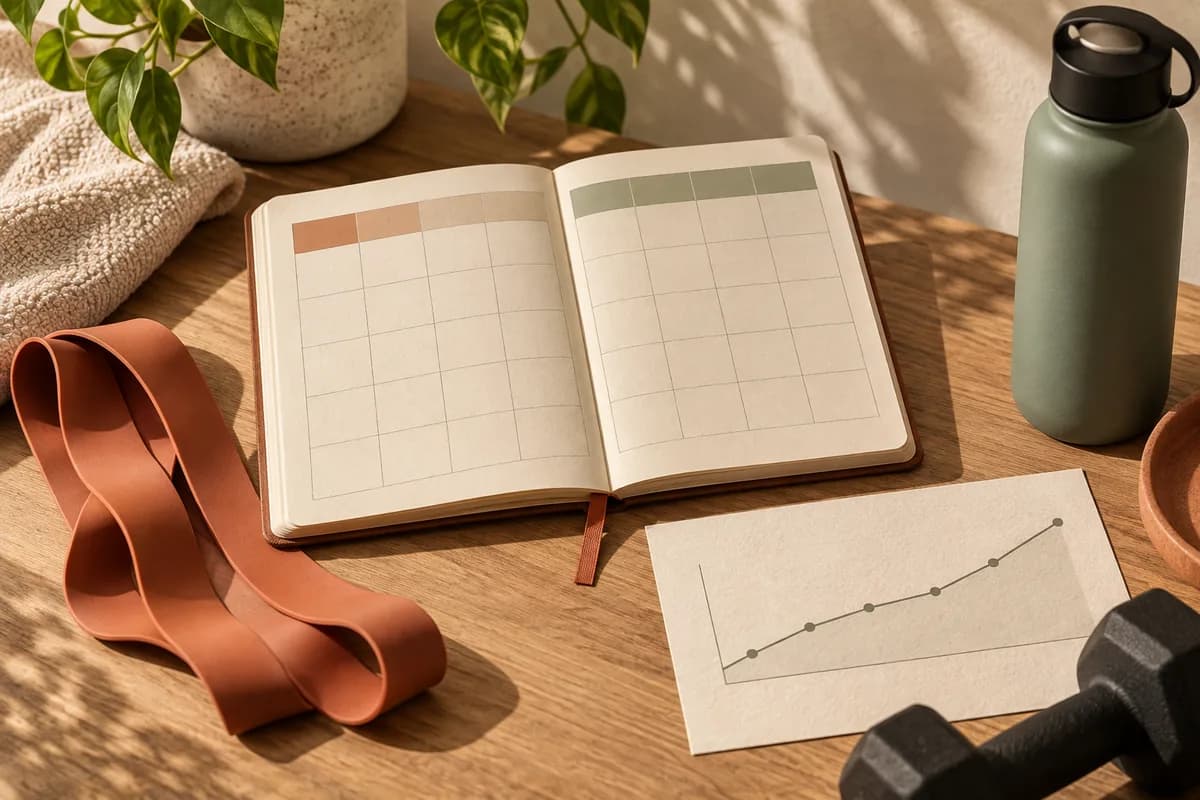
Example visual brief: Show three adjacent cards labeled “Plan,” “Do,” and “Reflect.” The first card lists a session purpose and a suitable option; the second shows the actual movement cue and rest; the third shows a log and one question about comfort. This is more informative than a stock photograph of a person lifting a heavy weight. It tells the reader how the ebook works and gives the seller a truthful preview asset.
A maintenance plan after publication
The first release is not the last editorial pass. Readers may find a broken link, an unclear movement, or a file that prints poorly on common home printers. Create a correction address and a version number. Review external health guidance, platform policies, and links at a stated interval. If a correction affects safety or a substantial claim, update the file promptly and tell prior buyers how to get the new version where the selling channel permits it.
Keep a small changelog in the ebook: version, date, what changed, and why. A correction such as “clarified the substitute movement on page 14” is more useful than silently replacing a PDF. Do not treat a changed cover color as an evidence update. For a coach’s client companion, align the file with the current service agreement and confirm that readers know which questions belong in a personal session. For a standalone product, make the update path clear on the sales page.
A buyer-support template
When a buyer writes that an instruction is unclear, respond by asking which page and step caused trouble, then review the page itself. Do not give personalized medical or exercise advice in a generic support reply if you are not providing that service. If the wording could mislead other buyers, change the book. Track the issue alongside related feedback so one polite support exchange becomes a product improvement. A small library of recurring questions can become an FAQ, but the book should be edited first when the question reveals missing core instruction.
The long-term marketing benefit of maintenance is credibility. A dated, corrected, accessible guide is easier for a reader to recommend than an evergreen-looking file with stale links and unanswerable claims. Acknowledging a correction is a sign of care, not a weakness.
Avoid the five most costly errors
First, promise an outcome instead of a process. Weight, appearance, pain, and performance depend on factors the ebook cannot control. Name the program contents and intended skills. If a health benefit claim is made, substantiate it at the level the FTC expects. A result disclaimer cannot rescue an unsupported headline.
Second, publish unreviewed AI exercise text. Models can invent contraindications, omit setup cues, or mix instructions from different movements. A qualified human must review the content and every instructional graphic. Use AI as an organizational assistant only within a process you can verify.
Third, treat nutrition as filler. A generic meal plan can be inappropriate for people with allergies, medical needs, religious constraints, eating-disorder histories, or different budgets. If the product includes diet advice, define scope and obtain suitable expertise. A blank meal-planning template may be safer and more broadly useful than a prescriptive plan outside your qualifications.
Fourth, confuse a log with a coached program. Repeated blank pages can be a valid stationery product when described honestly. They do not become evidence-based training simply because the cover says “expert.” Decide whether you sell a tool for self-recording or instruction, and price and categorize it accordingly.
Fifth, launch with no route to the reader. A direct store link needs an audience; an Amazon listing needs clear metadata and genuine reviews; an Etsy printable needs truthful preview images. Choose one acquisition channel and test it before making a family of nearly identical products. The book’s utility is the foundation of word of mouth.
Release checklist
- Define the intended reader and starting level in plain language.
- State what is and is not included in the product.
- Have a qualified person review exercise and health content appropriate to its scope.
- Verify every number and claim against a dated source.
- Audit explicit and implied results claims in the title, images, testimonials, and ads.
- Confirm permission for photographs, diagrams, quotes, and customer stories.
- Check current marketplace rules for AI-generated content, digital files, and content quality.
- Test the actual PDF or ebook on phone, desktop, and print where applicable.
- Make instructions understandable without a coach beside the reader.
- Calculate contribution per sale with current fees and realistic production expense.
- Include an update policy and contact route for corrections.
- Publish one sample page that accurately represents the full book.
The checklist is a production gate, not decoration. If the book cannot pass one of these items, revise before buying ads. A successful launch is not merely a completed checkout; it is a buyer receiving the product they expected and being able to use it responsibly.
Frequently asked questions
Can I sell a workout plan as a PDF?
Yes, if the plan is original, suitable for the intended reader, professionally reviewed as needed, and distributed under the chosen platform’s current rules. The PDF should be readable and usable at the size customers actually use. A sales page must describe its scope accurately and avoid unsupported health outcomes.
Do I need to be a certified trainer to write a fitness ebook?
Requirements vary by jurisdiction and the services offered, so check the rules that apply to you. Even where a general educational book is allowed, credentials and qualified review matter for safety and credibility. Do not claim certification or individual clinical expertise you do not have. Seek appropriate legal and professional guidance for regulated advice.
Can AI write my fitness guide?
AI can help brainstorm structure or draft language, but it does not replace a qualified reviewer, source verification, user testing, or appropriate disclosure. The creator remains responsible for every instruction and claim. Do not present an AI-generated image of a pose as an instructional demonstration without human accuracy review.
Which store is best for a fitness ebook?
It depends on format and acquisition. A readable guide may fit Kindle; a printable tracker may fit Etsy; a coach with an audience may use a direct store; a workbook may need print. Test one product-channel fit instead of assuming a marketplace supplies demand automatically.
How much should I charge for a workout PDF?
No universal price follows from the word count. Compare products serving the same reader, calculate current channel costs, and test a sample page with buyers. Charge for actual instructional quality and usefulness, not a claimed transformation.
Are before-and-after images a good marketing tool?
They can imply a typical outcome and raise substantiation and consent issues. Consider whether the overall page conveys a claim you cannot support. A clear sample spread, program outline, and reviewer information may communicate value more honestly.
Should I include a meal plan with a workout guide?
Only if it serves the defined reader and you have appropriate nutrition expertise and review. A flexible planning template can be different from individual dietary advice. Be especially careful with medical conditions, allergies, and any promise about weight or disease.
What should a free sample contain?
Show a representative part of the book: one complete exercise explanation, a portion of the schedule, and a log or adaptation page. A cover image alone does not let a buyer judge readability, instruction quality, or fit.
Sources, limits, and next step
This guide was checked against public primary sources in September 2026. It offers publishing and editorial guidance, not a personal exercise plan or income forecast. We did not observe seller transactions and do not claim a typical fitness-ebook income. Current platform fees and policies should be verified from the linked source before launch.
- CDC, Adding Physical Activity as an Adult: current U.S. public-health activity guidance.
- FTC, Health Products Compliance Guidance: substantiation and implied advertising claims.
- Etsy digital listing help and Creativity Standards: file and disclosure rules.
- Amazon KDP content guidelines: publishing and AI-generated-content requirements.
- U.S. Copyright Office AI initiative: human authorship context.
Write the brief, build one complete sample week, and have a qualified reviewer test it before drafting the rest. Then plan the book and choose the distribution channel that matches its actual use.